
AFRIMA has successfully collaborated with policymakers, governments, African artistes, producers, record labels, promoters, publishing companies, media and the African Union Commission (AUC) to celebrate and promote African music globally,” Dada told the conference.
“Through our seven core pillars, namely Music Awards, Music Festivals, Music Business Hub, Talent Discovery and Promotion, AFRIMA Creative Academy, Advisory and Policy Debates, Corporate Social Responsibility and Advocacy, we have positioned African music as a tool for integration, inclusivity, economic prosperity, and world peace.”
He said as the longest-running African music award platform with a global reach, AFRIMA plays a critical role in enhancing the visibility of African music.
Dada added that. ” AFRIMA’s events bring together thousands of music artistes, actors, celebrities, governments, and professionals from around the world to continent’s cultural significance on the global stage.
“Through our partnership with the AU and other stakeholders, AFRIMA is well-positioned to support the implementation of policies that will drive the growth of Africa’s creative economy. With a focus on integration, innovation, and cultural preservation, AFRIMA and the AU are set to make significant strides toward the Africa We Want as envisioned in Agenda 2063.”
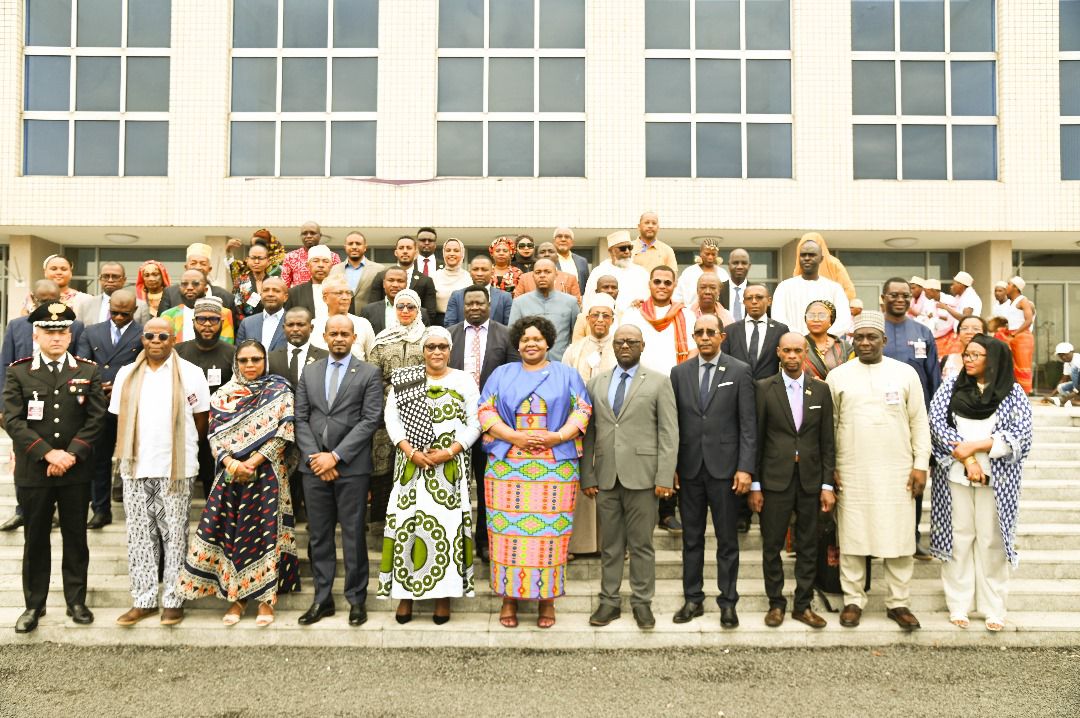
The AU/PACC6, held under the theme “Arts, Culture, Heritage, and Education: Levers for Buildings Africa We Want,” served as a platform for Pan-African cultural institutions, cultural workers,
and experts to engage in discussions on how to leverage these sectors to build a stronger African identity.
The congress concluded with a framework for action designed to guide cultural and educational development across the continent.
The congress resulted in several key resolutions aimed at strengthening Africa’s cultural sectors, including support for national cultural policies, engagement of youth and women, heritage preservation, promotion of African languages, and cultural exchange programmes that allow African youth to collaborate, showcase their work, and learn from one another.
In her opening remarks, Mrs. Angela Martins, Acting Director for Social Development, Culture, and Sport at the African Union Commission (AUC), highlighted the rapid growth of Africa’s cultural and creative industries, referring to them as the continent’s “new crude oil” due to their increasing global economic influence. Martins called for greater investment in the sector, citing AU Assembly Decision 772, which advocates for allocating at least 1% of national budgets to arts, culture, and heritage.
As part of the AU’s efforts, she announced the development of an arts education policy aimed at integrating arts education into school curriculums across Member States.
“This policy aligns with the AU’s theme of the year for 2024 and aims to nurture young talent from an early age,” she said.
Martins praised the efforts of key institutions in the entertainment, art and cultural space including AFRIMA which she described as “Africa’s global music awards and longest-running music award platform, with a huge global appeal, diaspora audience, and youthful fans.”
The main events of AFRIMA are usually broadcast live to over 84 countries around the world after a continental and global roadshow, with thousands of music artists, actors, celebrities, members of the diplomatic corps, professionals in the creative space, tourists, media and fans from all over the world converging on the host country.
Pic 1. Cross section of participants including AFRIMA’s Director of Stakeholders Engagement, Media, and Communications (Global), Sola Dada during the recently concluded 6th Pan-African Cultural Congress (AU/PACC6) with the theme “Arts, Culture, Heritage, and Education: Levers for Buildings Africa We Want” held in Moroni, Union of Comoros